 Bookable
An Apollonaut travel guide
A monument and its landscape.
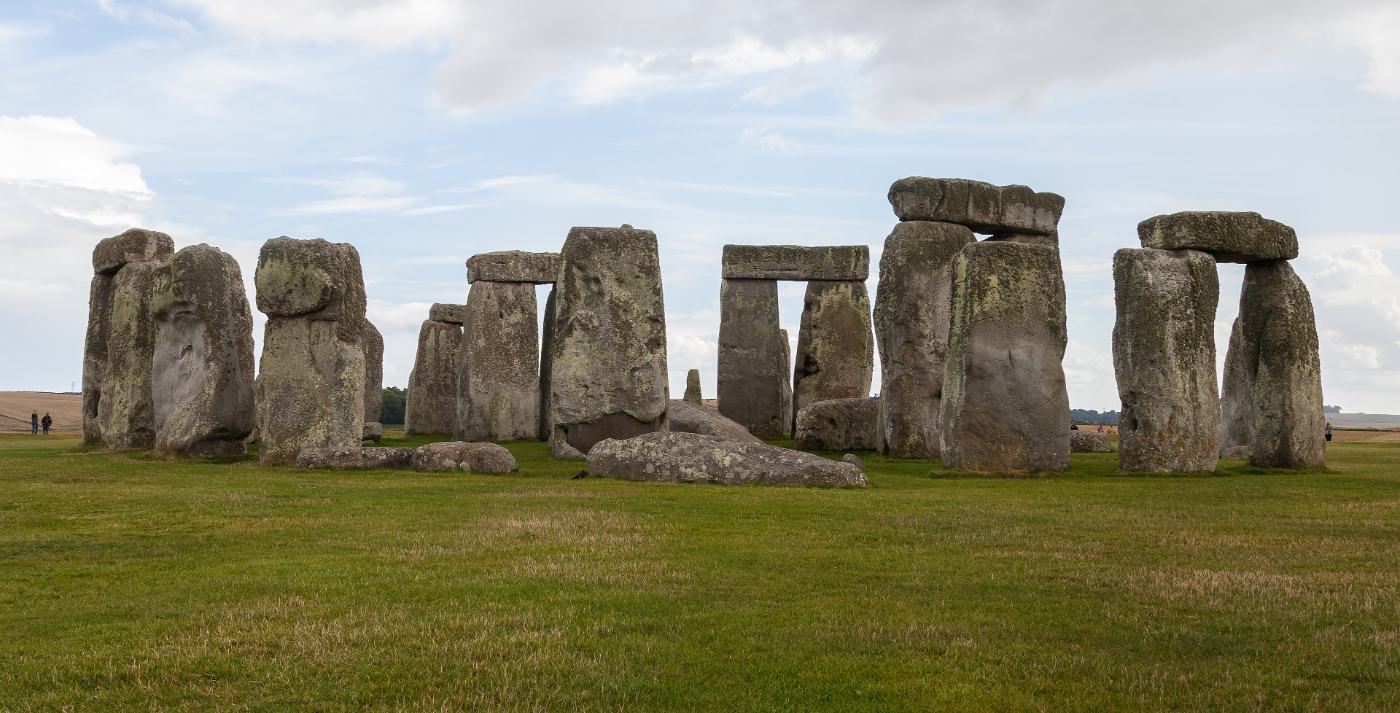
An earthwork, a circle of great stones and a landscape of burial mounds offer several ways into the story of Stonehenge.
On this page
Built in stages
Work began on Stonehenge about 5,000 years ago, and it was built in stages over many years, with building and alteration continuing into the Bronze Age. The stone circle dates from about 2500 BC, in the late Neolithic period.
The bluestones came from the Preseli Hills in Wales and the larger sarsens from the Marlborough Downs. How the stones were moved is still not known.
The sun and the stones
The sun rises over the Heel Stone on the longest day of the year and sets over it on the shortest. English Heritage suggests this points to a prehistoric temple aligned with the movements of the sun, while stressing that its purpose can only be inferred.
Stonehenge was also a burial place: for several hundred years after about 3000 BC it was used as a cremation cemetery.
A World Heritage Site
Stonehenge stands among the densest concentration of Bronze Age burial mounds in Britain. In 1986, with Avebury, it became one of the first World Heritage Sites in the United Kingdom.
English Heritage cares for the monument, and the National Trust owns much of the landscape around it. The History page offers a longer introduction.
Read at the source
Sources & further reading
- English Heritage: Stonehenge history and stories
- English Heritage: A timeline of Stonehenge
- Wikipedia: Stonehenge
Links lead to the original publishers.