 Bookable
An Apollonaut travel guide
Stones in an open landscape.
An introduction to Salisbury Plain around Stonehenge, a landscape of earthworks, burial mounds and ancient routes.
On this page
Read the stones
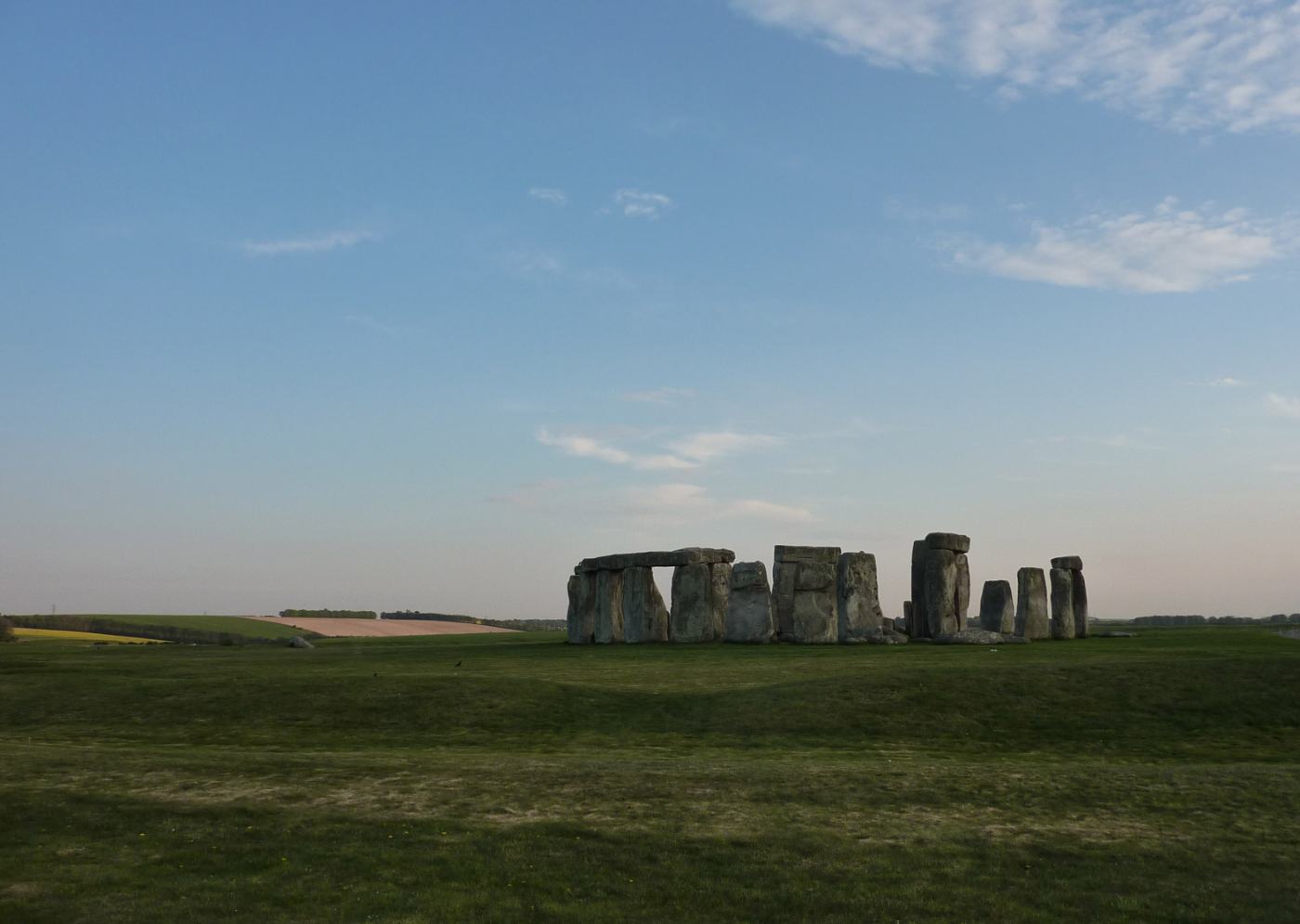
The outer circle of sarsens, about 30 metres across, is capped by lintels; inside stands a horseshoe of five trilithons, with the smaller bluestones set among them.
A guide can give context without turning a place into a backdrop. The lintels are held in place by joints, such as mortise and tenon, otherwise found in woodworking.
The barrows
The walk from the visitor centre passes Bronze Age burial mounds, part of the densest concentration of barrows in Britain. They are burial places, and they deserve the same care as the stones.
Begin with a detail and ask who built it, who was buried there and how it has changed. A photograph alone cannot tell you that.
The Avenue
The Avenue, a pair of banks and ditches, runs about 2 miles from Stonehenge to the river Avon. It was built around 2300 to 2200 BC.
Look at the meeting of the two: a monument of stone and the earthworks that tied it to the land and the river.
Make room for context
Pair this reading with the history of Stonehenge and the Journal. This is an introduction for visitors, not a claim that our team manages these places or represents the people who care for them.
Read at the source
Sources & further reading
- English Heritage: Stonehenge history and stories
- English Heritage: A timeline of Stonehenge
- Wikipedia: Stonehenge
Links lead to the original publishers.