 Bookable
An Apollonaut travel guide
A landscape of stone and olives.
An introduction to Volubilis and the country around it, from Roman stone to the imperial city of Meknes.
On this page
Read the region from its stone
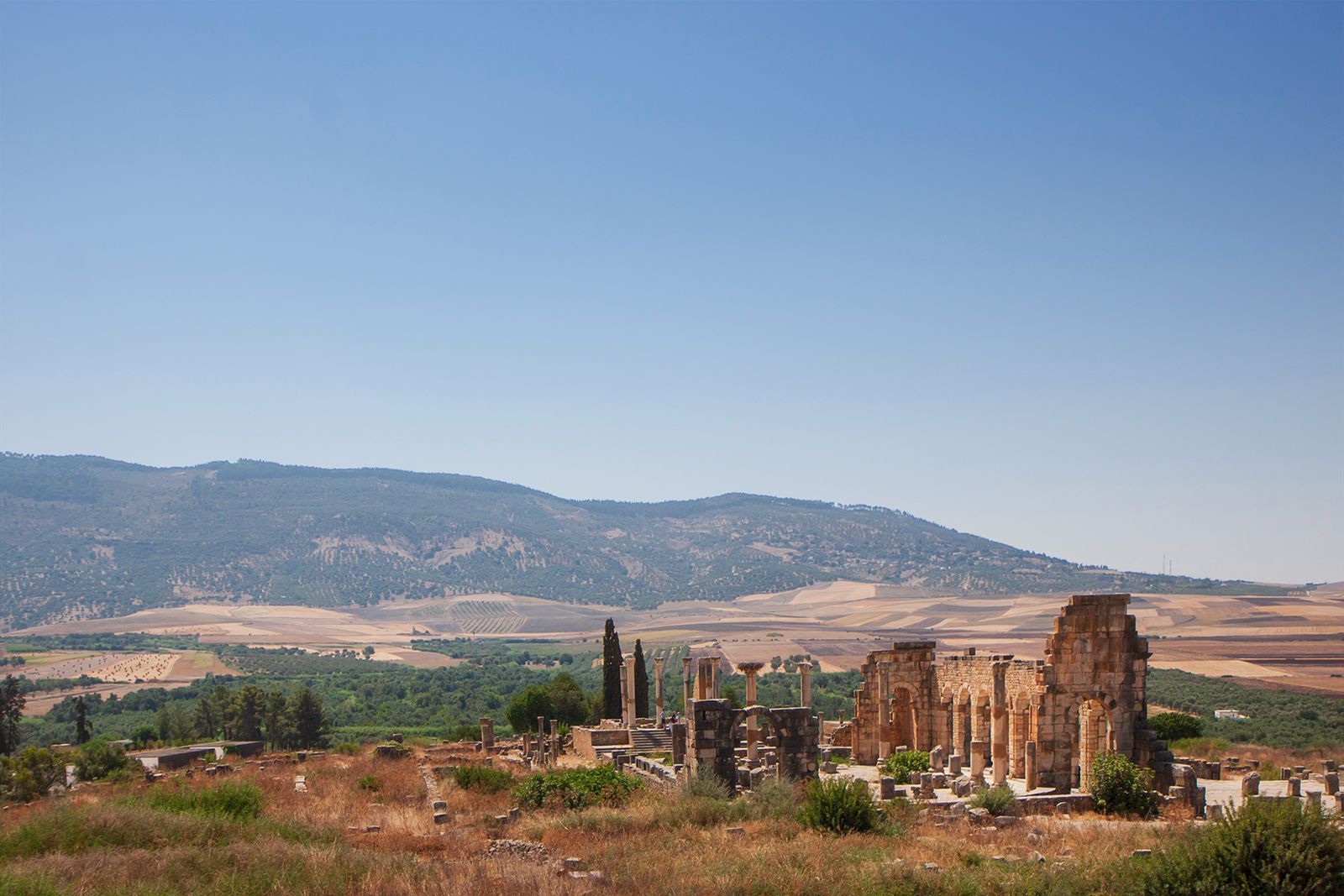
Volubilis stands on a ridge below the Zerhoun mountain, above a fertile plain. The town of Moulay Idriss Zerhoun, where Idris I is buried, is close by, and the city of Meknes lies to the south.
A regional guide can give context without turning a town into a backdrop. Notice how a street was laid out, how a gate fits a wall, or how a press turned olives into oil. Respect homes, working farms and places of worship.
Stone, brick and mosaic
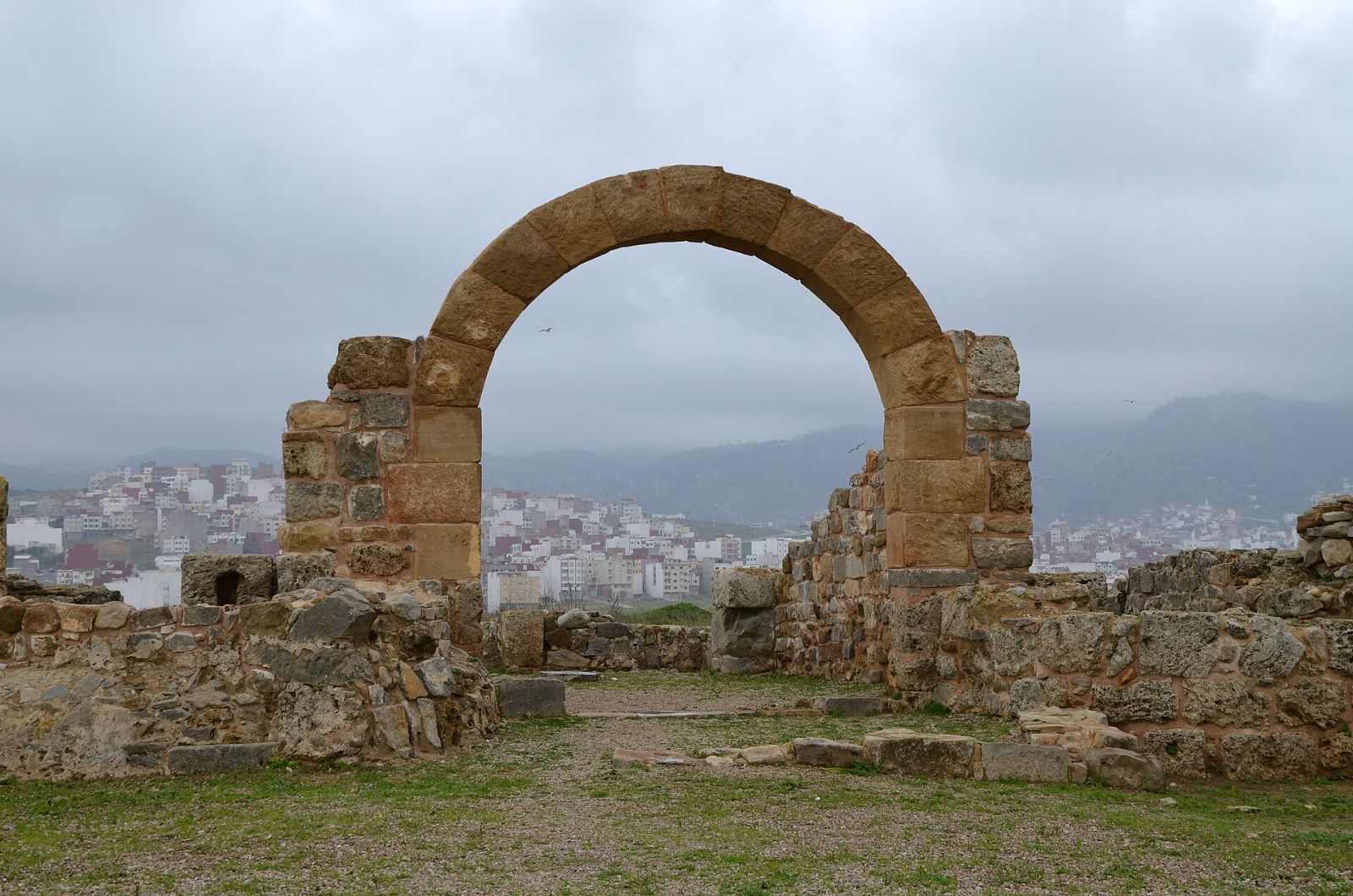
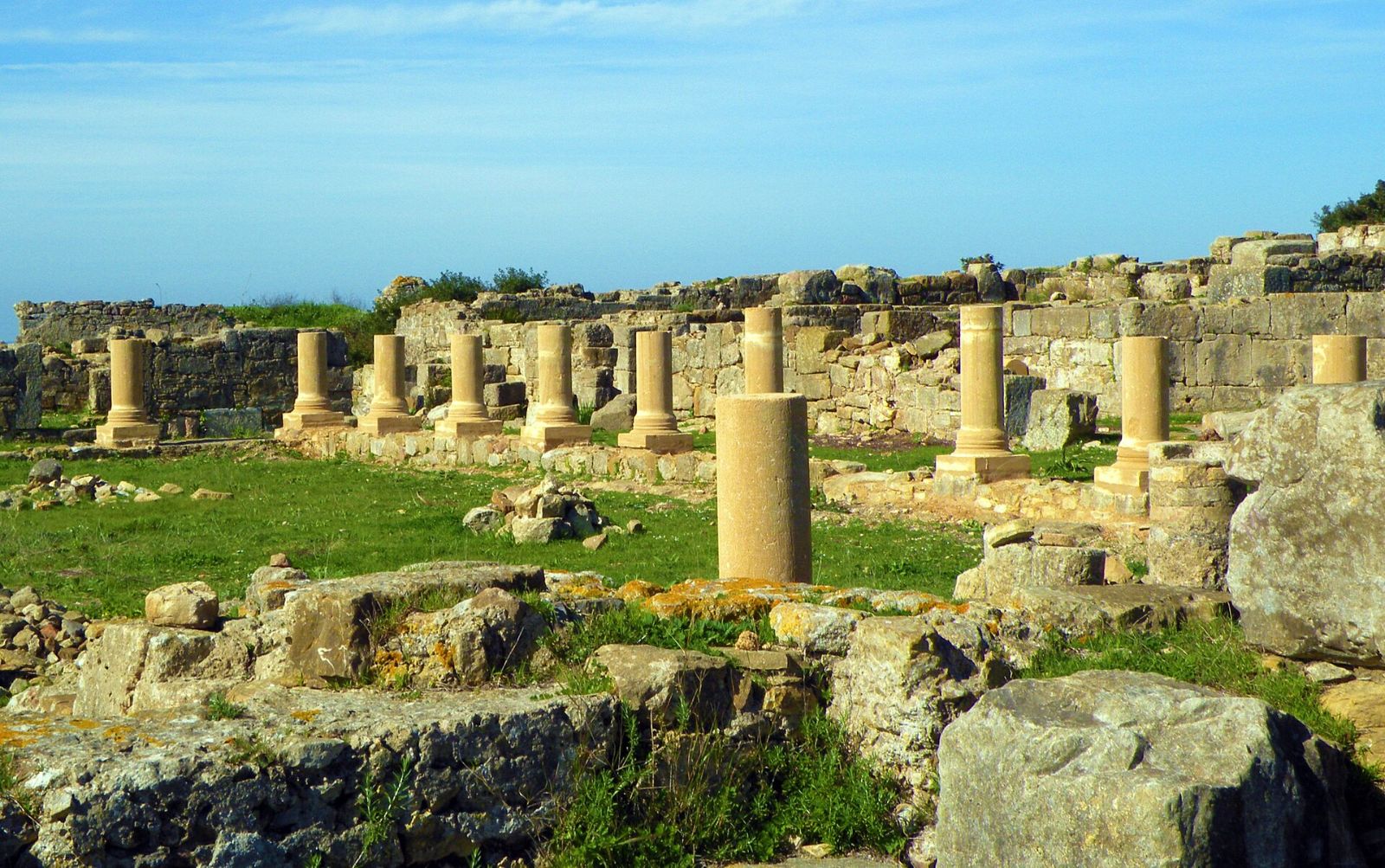
Cut stone, bands of brick, columns and floors of small coloured mosaic stones give the ruins their character.
Begin with a material and ask how it was made, reused and repaired. Stone from Volubilis itself travelled: Sultan Moulay Ismail took it from the ruins for his new capital at Meknes. A photograph alone cannot tell you who cut a block or laid a floor, or the conditions in which they worked.
A Volubilis chapter
Volubilis shows how a Roman town on the edge of the empire was built: a paved main street lined with shops, a forum with its basilica and temple, a ring of walls with gates, and houses with mosaic floors.
Look at the meeting of the two: the public buildings that announced Rome, and the oil presses that paid for them.
Make room for context
Pair this regional reading with the town’s history and the Journal. This is an introduction for visitors, not a claim that our team manages these places, commissions their restoration or represents their makers.
Read at the source
Sources & further reading
Links lead to the original publishers.