 Bookable
An Apollonaut travel guide
The place behind the detail.
A town by a river, a Roman camp built on its ruins and a valley between the mountains and the sea offer several ways into the story of Tamuda.
On this page
A town beneath a camp
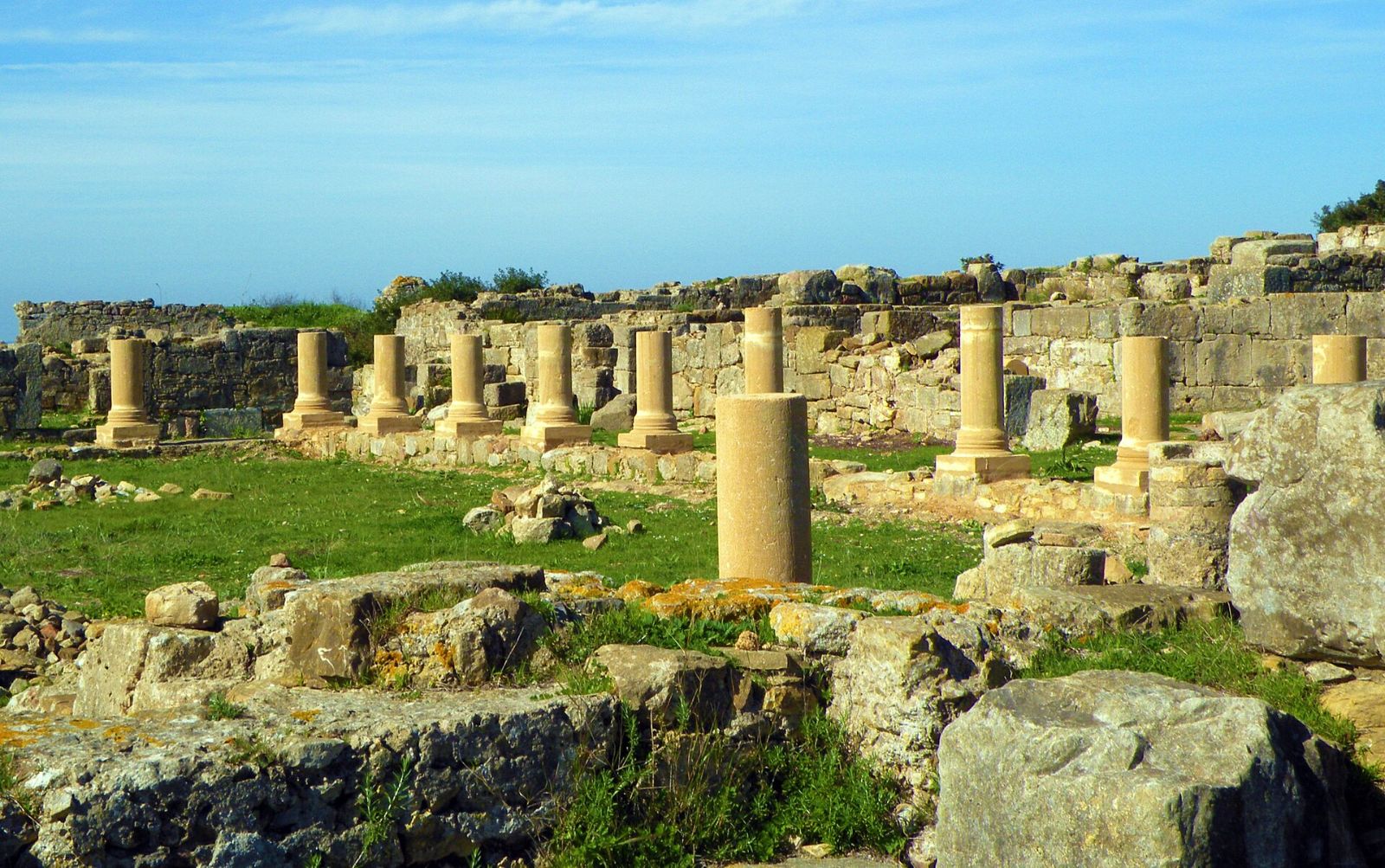
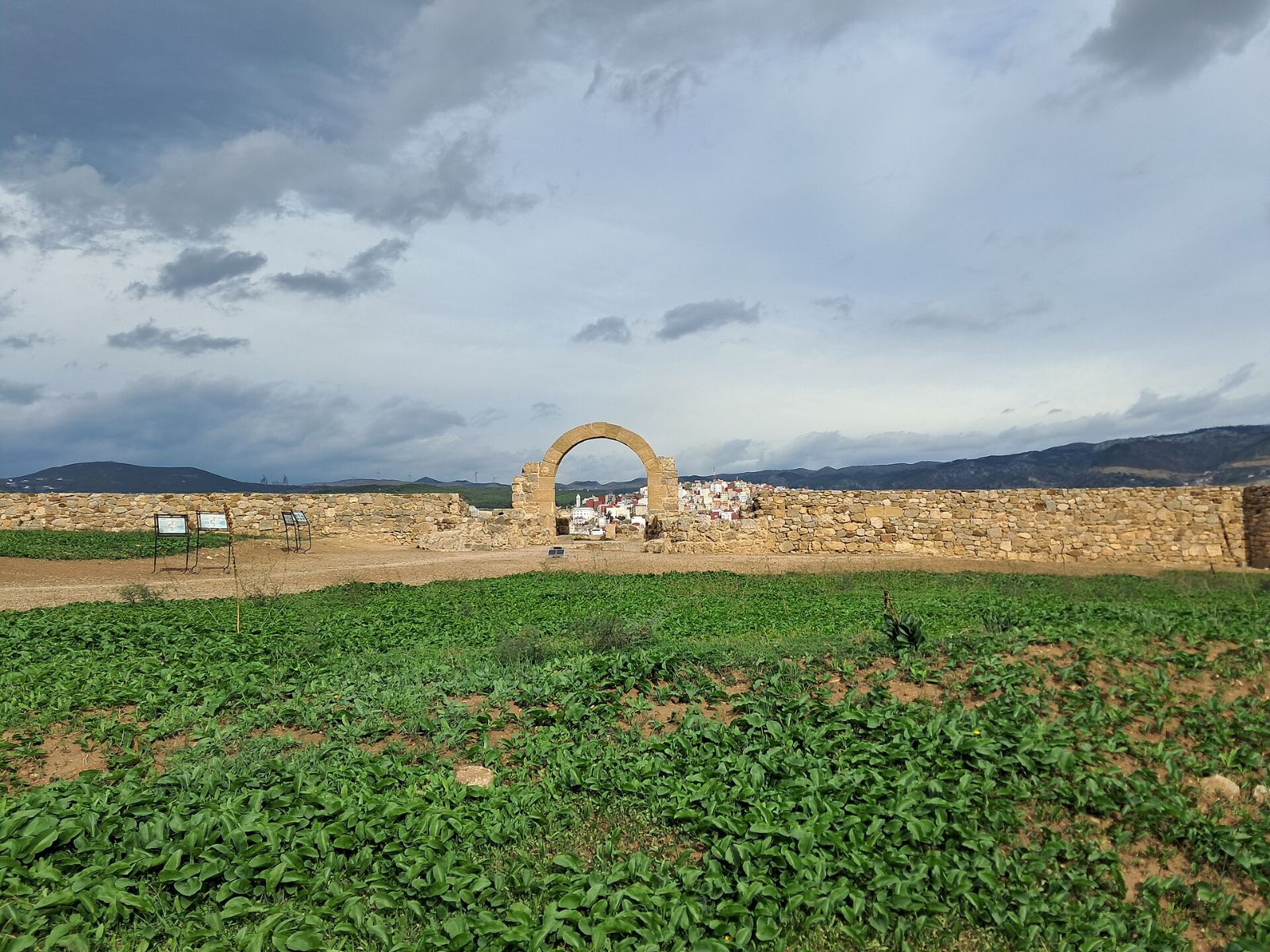
Tamuda began as a Mauretanian town in the 3rd century BC, laid out on a regular grid beside the river. After its destruction around AD 40, the Roman army built a military camp on its ruins, and the camp stayed in use until the 5th century AD.
Today the two can be read side by side: the low foundations of the town, and the thicker walls and gates of the camp.
Walls, towers and gates
The camp was roughly square, with a gate on each side and towers at its corners and beside its gates. At the end of the 3rd century AD it was strengthened with semicircular towers.
Inside, two main streets met at a large cistern fed by a channel, and small baths stood near the south gate. Many finds from the site are kept at the Archaeological Museum of Tétouan.
Protected and opened to visitors
Morocco’s Ministry of Culture listed Tamuda as national heritage in 2005. Conservation work, a laboratory, ticket booths, two entrances and a visitor circuit followed, and the restored site opened to the public in January 2013.
This history belongs to the place and the people who shaped it. The History page offers a longer introduction, and the timeline gives a short route through selected milestones. The sources below were checked on 8 November 2026.
Read at the source
Sources & further reading
- Ministry of Youth, Culture and Sports: The archaeological site of Tamuda
- Wikipedia: Tamuda
- Wikipédia (in French): Tamuda
- Wikipedia (in Spanish): Tamuda
Links lead to the original publishers.