 Bookable
An Apollonaut travel guide
Setbacks and skylines.
An introduction to Rockefeller Center in Midtown Manhattan, where 30 Rockefeller Plaza rises at the heart of the complex.
On this page
Read the city from above
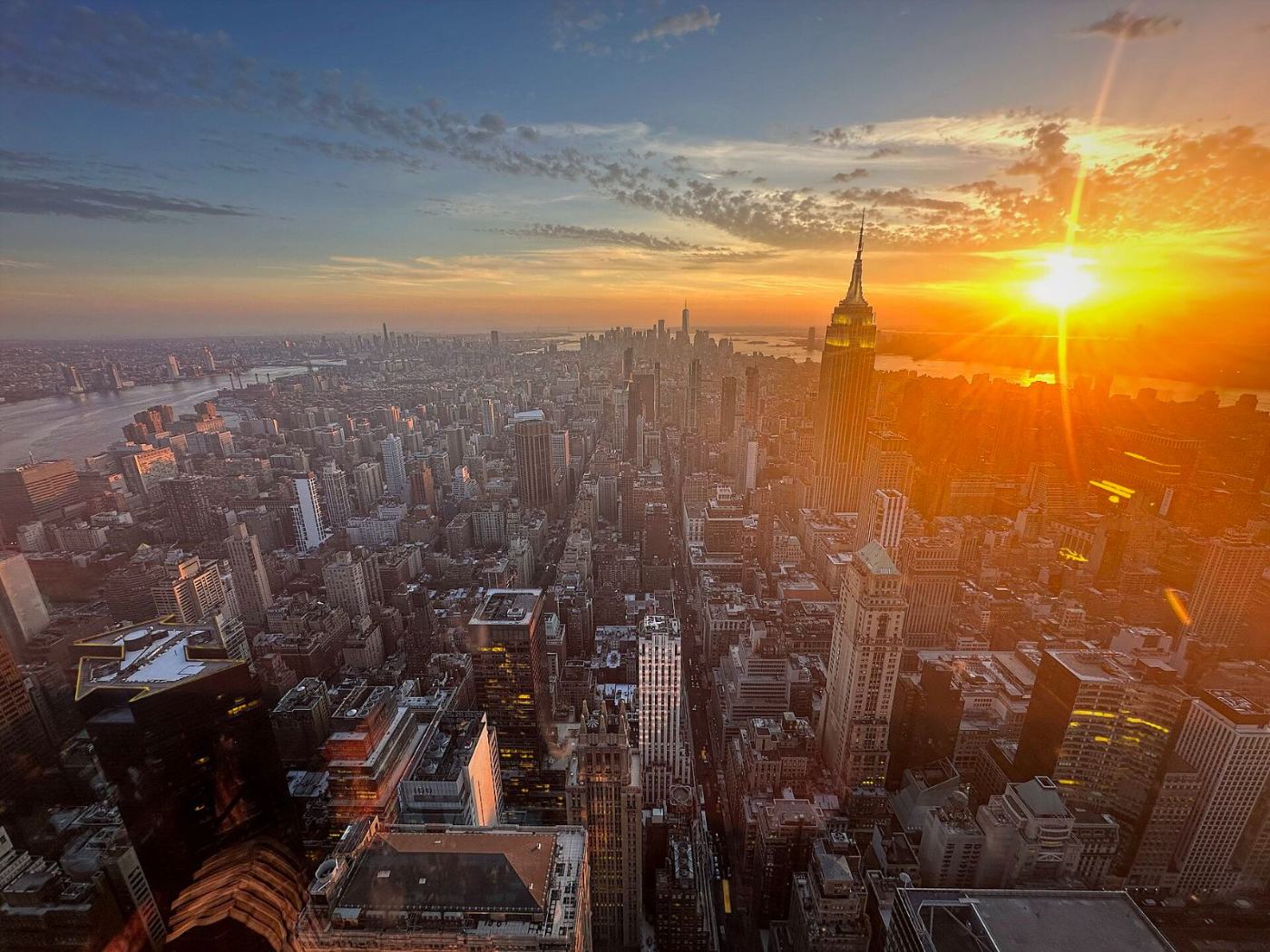
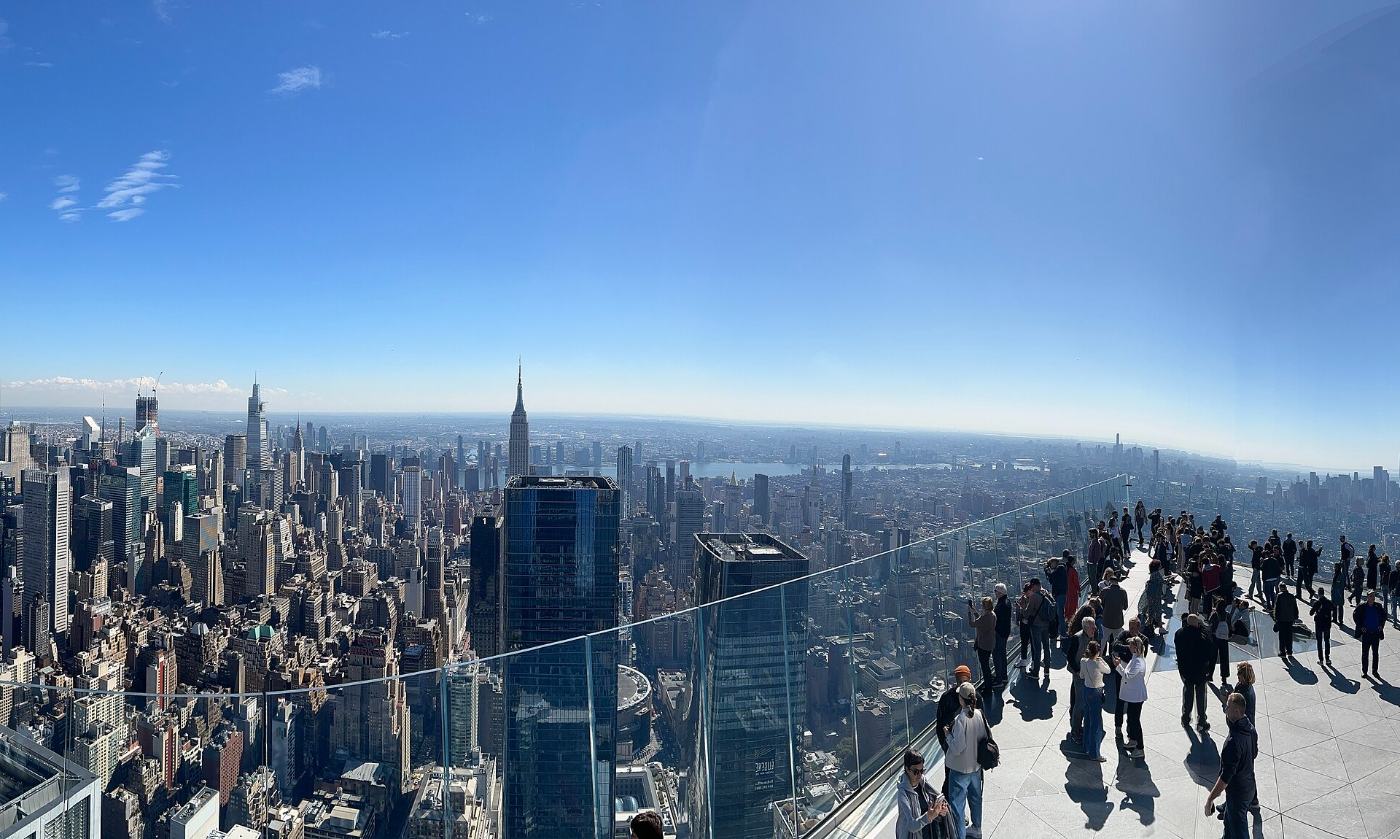
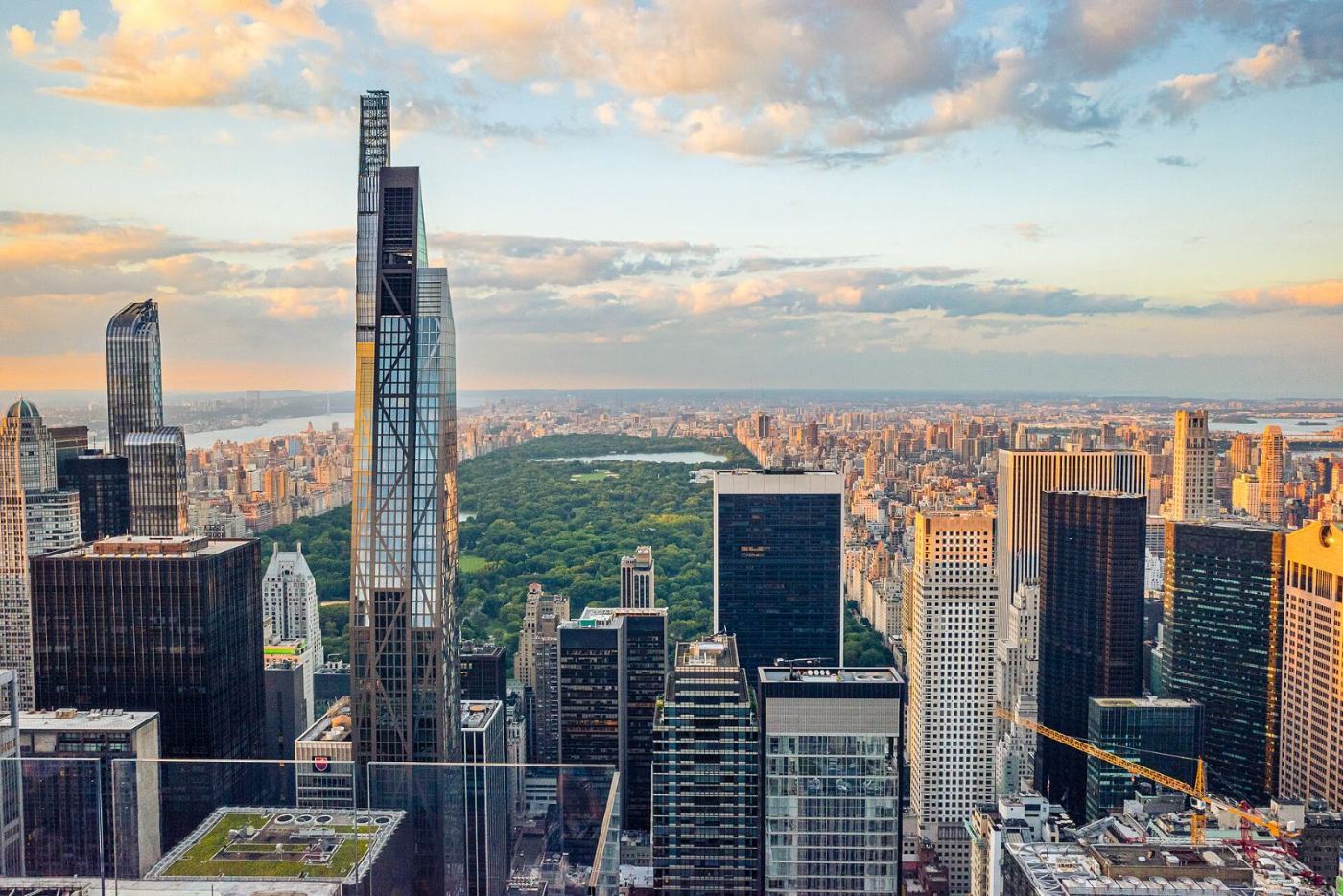
30 Rockefeller Plaza was intended as the central structure of Rockefeller Center, both physically and symbolically. From its deck, Central Park lies to the north and the Empire State Building to the south.
A city guide can give context without turning a neighbourhood into a backdrop. Notice how towers step back as they rise, how avenues lead the eye, and how older buildings sit among new ones.
Limestone, granite and aluminium
The tower’s facade is limestone, with granite at the base and aluminium spandrels between its windows. Its design conforms with the city’s 1916 Zoning Resolution.
Begin with a detail and ask how it was made, repaired and maintained. A photograph alone cannot tell you who set the stone or fixed the steel, or the conditions in which they worked.
A Rockefeller Center chapter
Top of the Rock shows Rockefeller Center from its highest point: a complex of Art Deco buildings planned together in the early 1930s.
Look at the meeting of the two: a working office and broadcasting building, and one of the city’s favourite viewpoints.
Make room for context
Pair this city reading with the tower’s history and the Journal. This is an introduction for visitors, not a claim that our team manages these places, commissions their restoration or represents their makers.
Read at the source
Sources & further reading
Links lead to the original publishers.