 Bookable
An Apollonaut travel guide
A palace with a long view.
A battle, a quarrelsome building project and a landscape by Capability Brown offer several ways into the story of Blenheim Palace.
On this page
A national reward
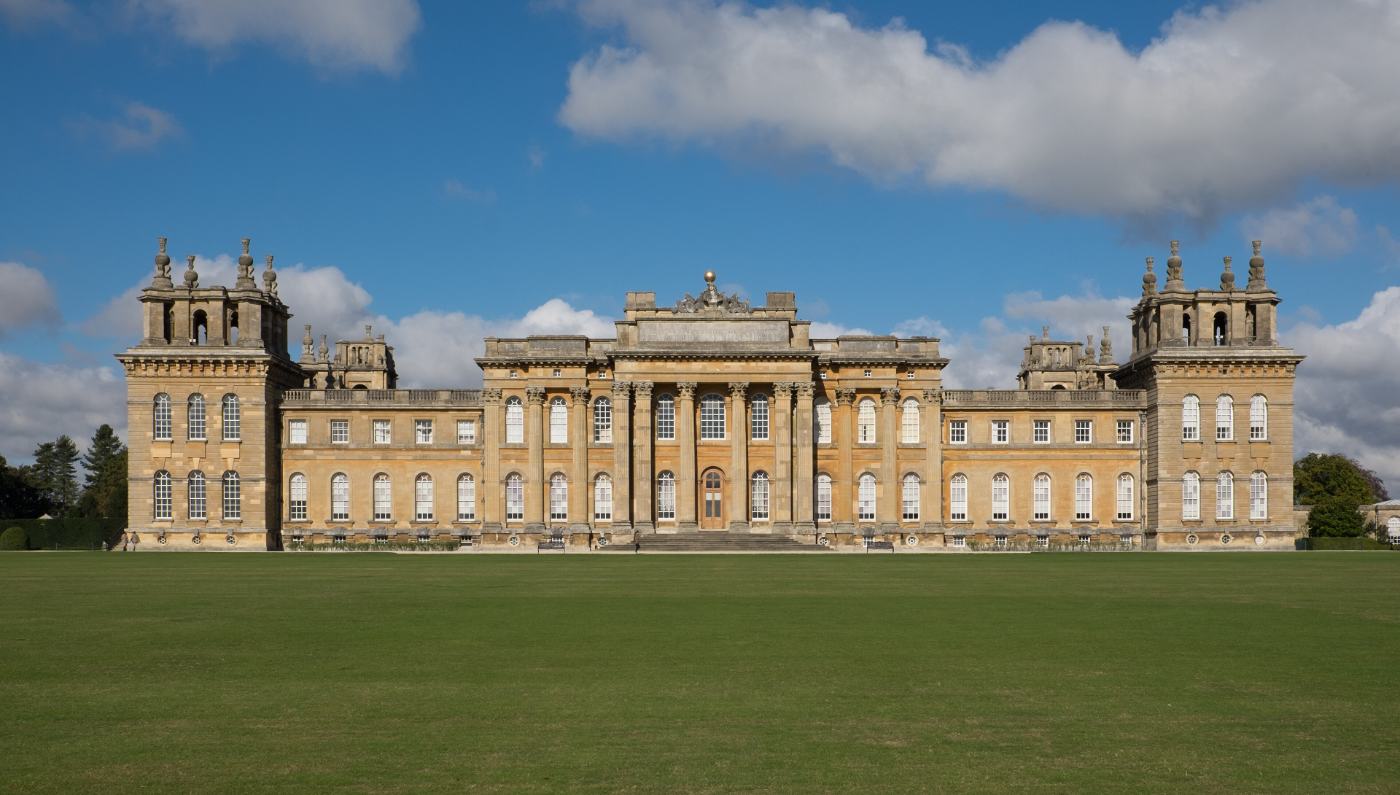
Blenheim was built from 1705 as a reward for the 1st Duke of Marlborough after the Battle of Blenheim, on a royal manor at Woodstock given by the Crown, with money voted by Parliament.
Sir John Vanbrugh’s design, in a severe English Baroque, gave the house the “castle air” of its corner towers and the monumental Great Court.
Rooms of state
Thornhill painted the Great Hall ceiling in 1716 and Laguerre the Saloon around 1720. Hawksmoor designed the Long Library between 1722 and 1725.
The State Rooms are hung with tapestries and family portraits gathered by generations of the Dukes of Marlborough, and they are still part of a lived-in house.
A designed landscape
Vanbrugh’s Grand Bridge was built between 1722 and 1724. From 1764 Capability Brown dammed the River Glyme to make the Great Lake, which flooded the bridge’s lower storeys.
Blenheim Palace and its park became a World Heritage Site in 1987. The History page offers a longer introduction.
Read at the source
Sources & further reading
Links lead to the original publishers.