 New
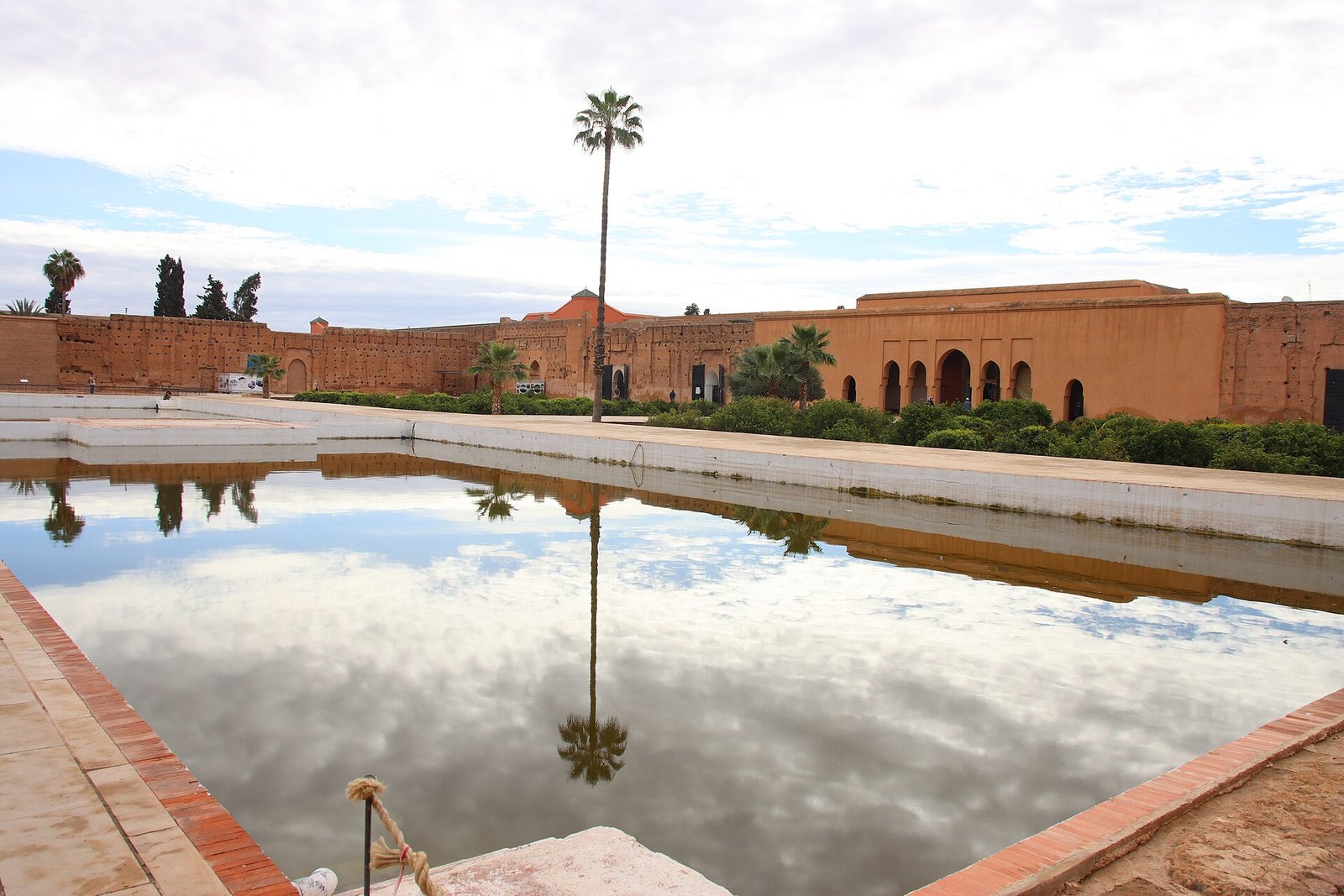
El Badi Palace
Marrakech, Morocco · Palaces & landmarks
An Apollonaut travel guide
A great basin, olive groves and a pavilion on the water offer several ways into the story of the Menara.
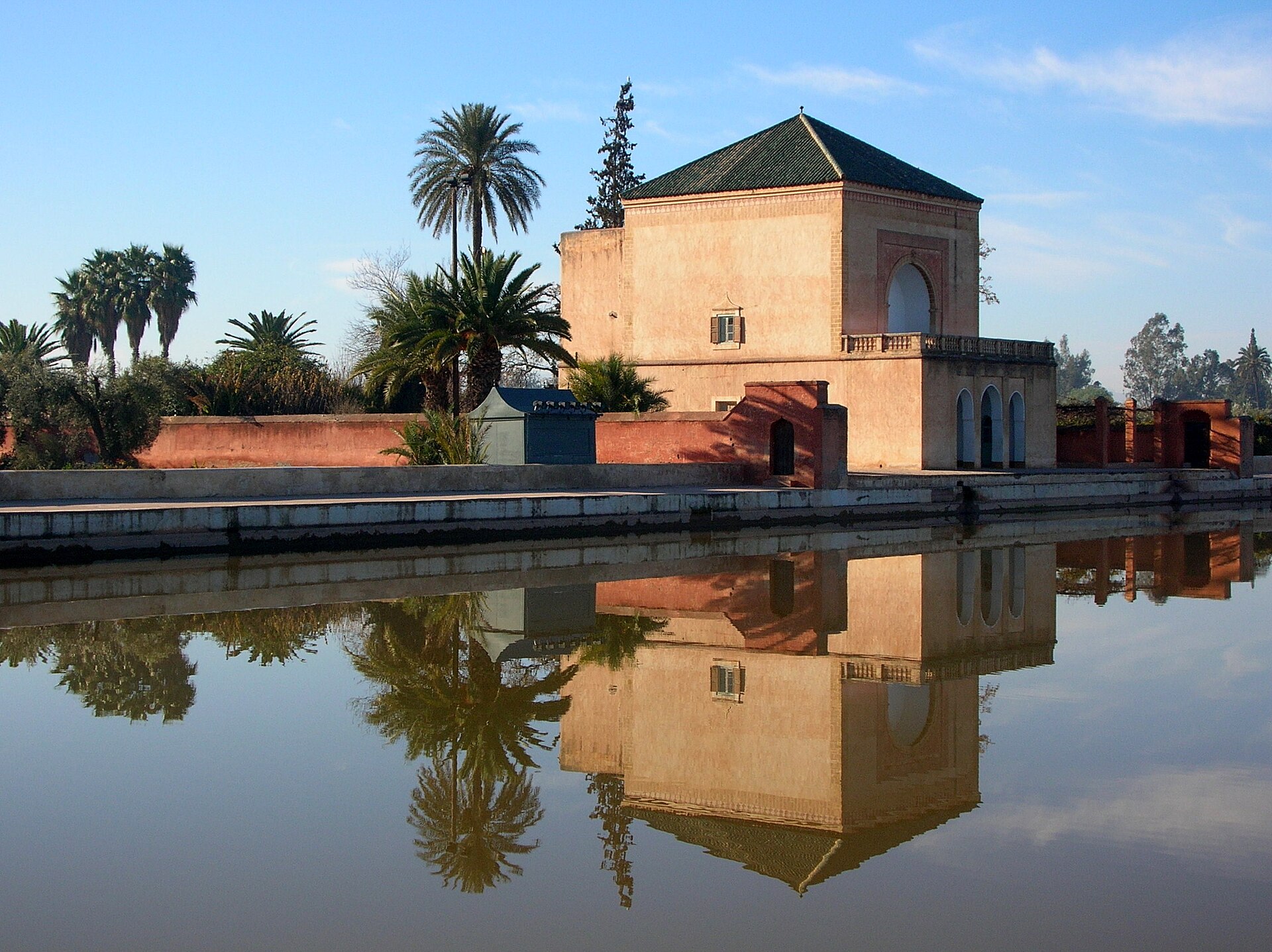
The Almohad caliph Abd al-Mu’min founded the Menara Gardens in 1157. The estate is about 1,200 metres long and up to 800 metres wide, and its orchard is still mostly olive trees, with fruit trees and cypresses, planted in a regular grid.
At its heart is a basin about 195 by 160 metres, filled by underground channels from the foot of the High Atlas and built above the orchards so its water could reach them by gravity.
The pavilion has two floors under a pyramid roof of green tiles. A triple-arched portico opens onto the water, with a balcony above it framed by a blind arch and an inscription band.
Its decoration is restrained: ochre walls, corners painted to look like brickwork, painted wooden ceilings and doors, and carved and painted plaster around the doors and windows.
The Saadians built a first pavilion in the 16th century. In the 19th century the Alaouite sultans Moulay Abd ar-Rahman and Muhammad IV restored and replanted the Menara and the Agdal gardens, and Muhammad IV’s pavilion was completed in 1870.
This history belongs to the place and the people who shaped it. The History page offers a longer introduction, and the timeline gives a short route through selected milestones.
Read at the source
Links lead to the original publishers.
The Apollonaut collection
Gardens, palaces and landmarks across Apollonaut. Search, or browse what’s coming next.
Destinations
MarrakechMorocco · 5 attractions TangierMorocco · 1 attraction BrașovRomania · 1 attraction VeronaItaly · 1 attraction ParisFrance · 1 attraction GranadaSpain · 1 attraction IstanbulTürkiye · 1 attractionAttractions
Jardin MajorelleMarrakech · Gardens · from €28Bookable El Badi PalaceMarrakech · Palaces & landmarksNew Saadian TombsMarrakech · Palaces & landmarksNew Caves of HerculesTangier · Nature & outdoorsNew Dracula’s CastleBrașov · Palaces & landmarksNew Juliet’s HouseVerona · Art & cultureNew Bahia PalaceMarrakech · Palaces & landmarksNew Palais GarnierParis · Art & cultureNew The AlhambraGranada · Palaces & landmarksNew Dolmabahçe PalaceIstanbul · Palaces & landmarksNew Menara PavilionMarrakech · Gardens & outdoorsNewNo matching attractions or destinations. Try a city or an attraction name.
New
Marrakech, Morocco · Palaces & landmarks
 New
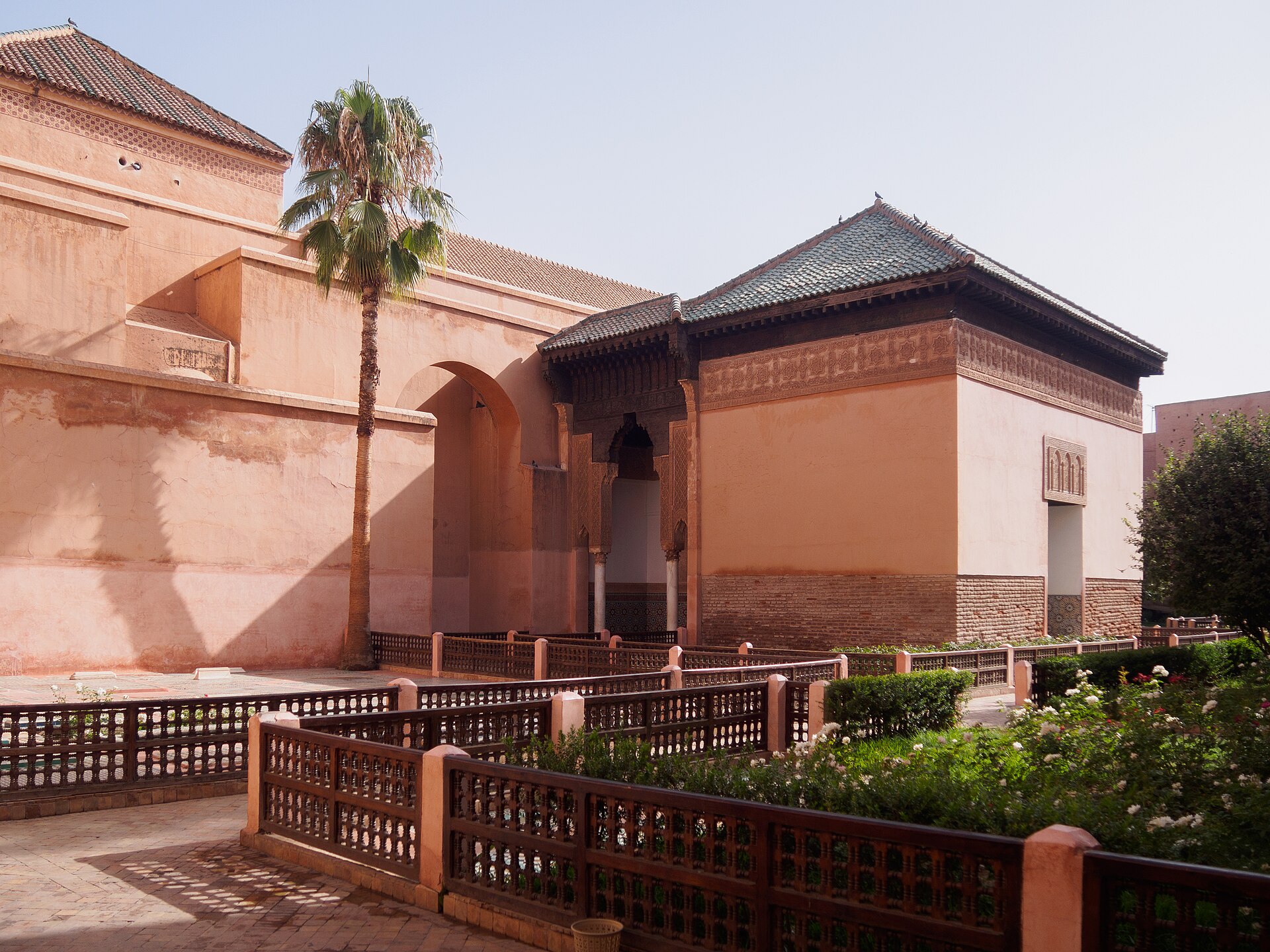
Marrakech, Morocco · Palaces & landmarks
 New
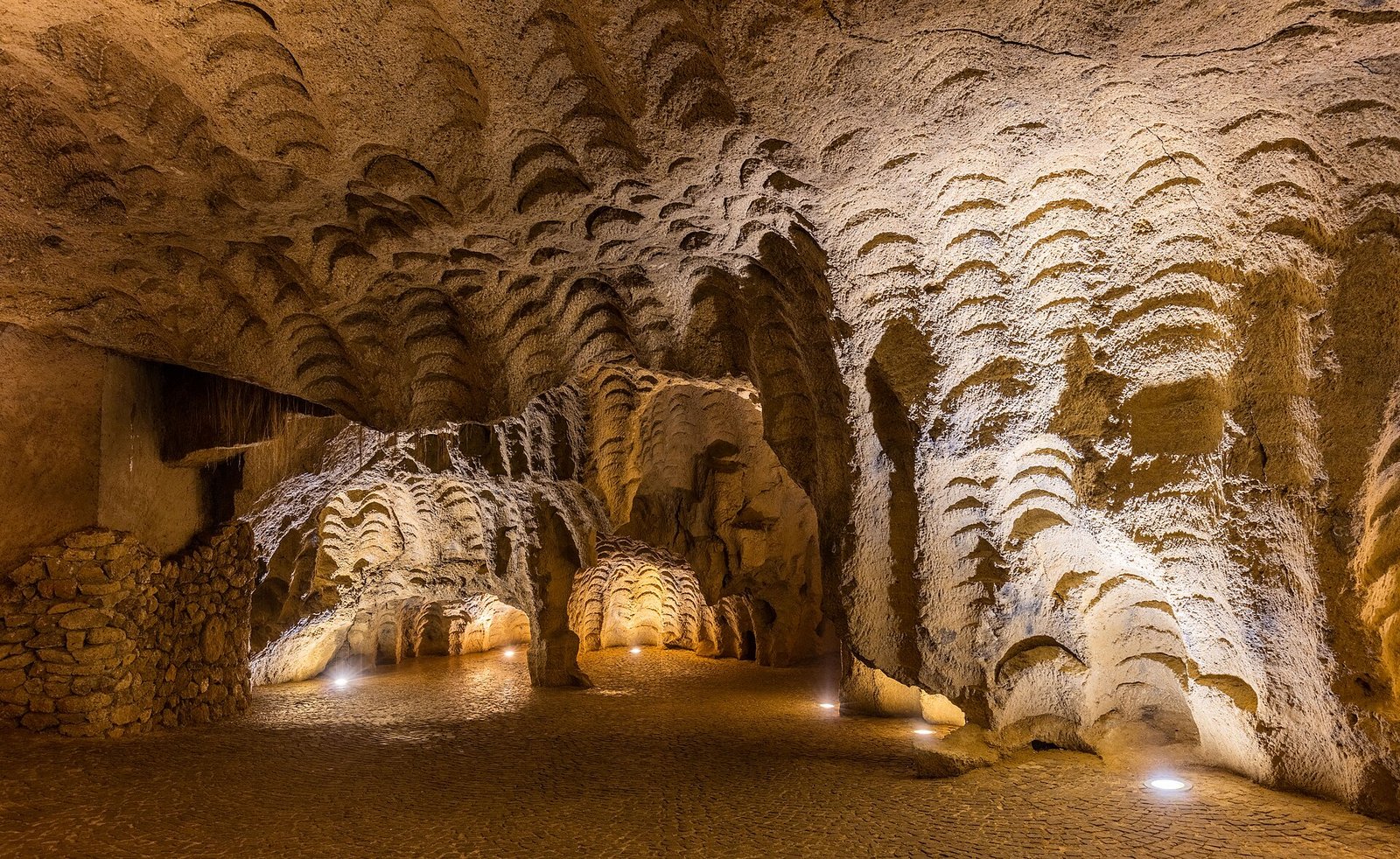
Tangier, Morocco · Nature & outdoors
 New
Brașov, Romania · Palaces & landmarks
 New
Verona, Italy · Art & culture
 New
Marrakech, Morocco · Palaces & landmarks
 New
Paris, France · Art & culture
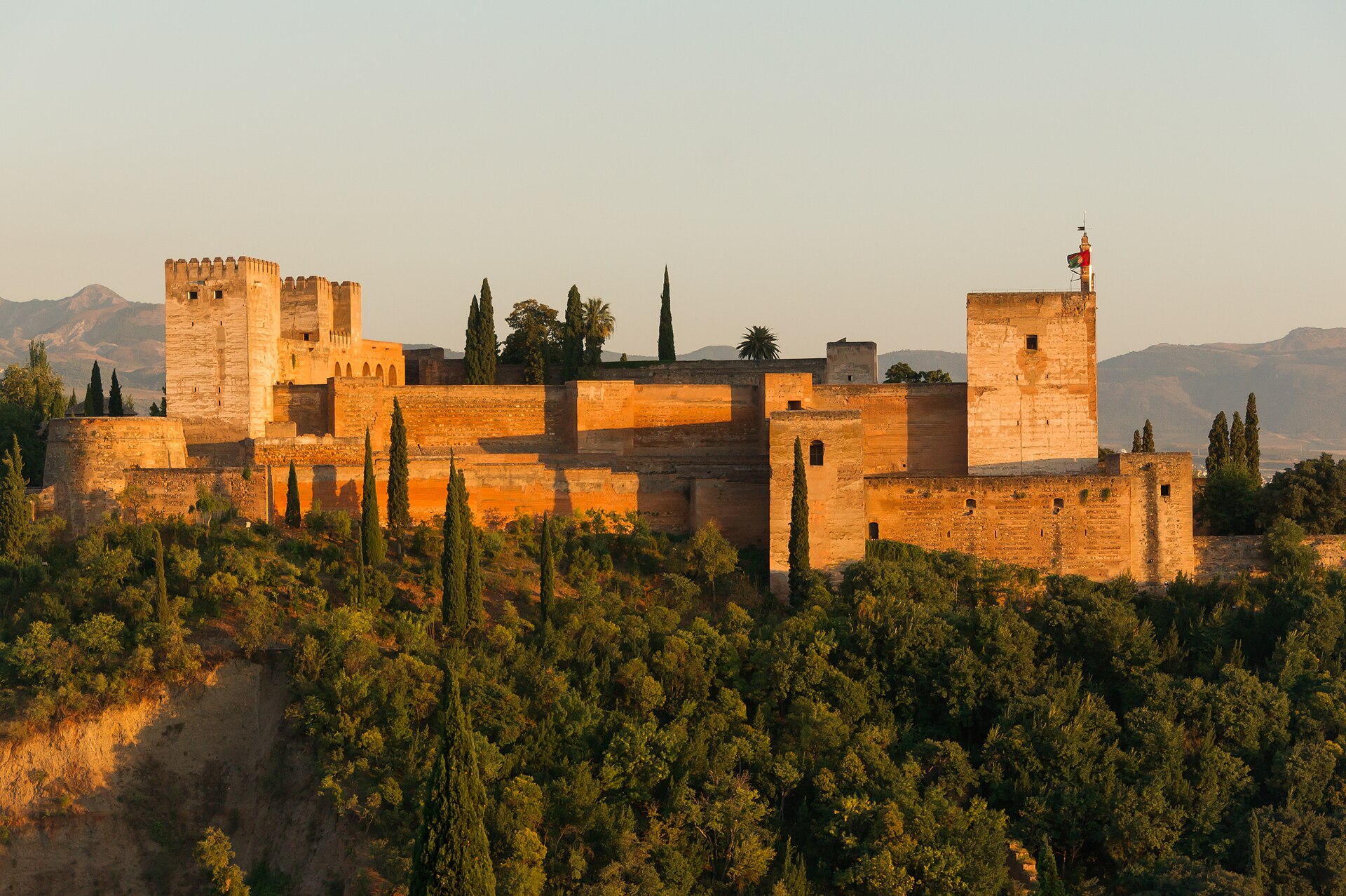 New
Granada, Spain · Palaces & landmarks
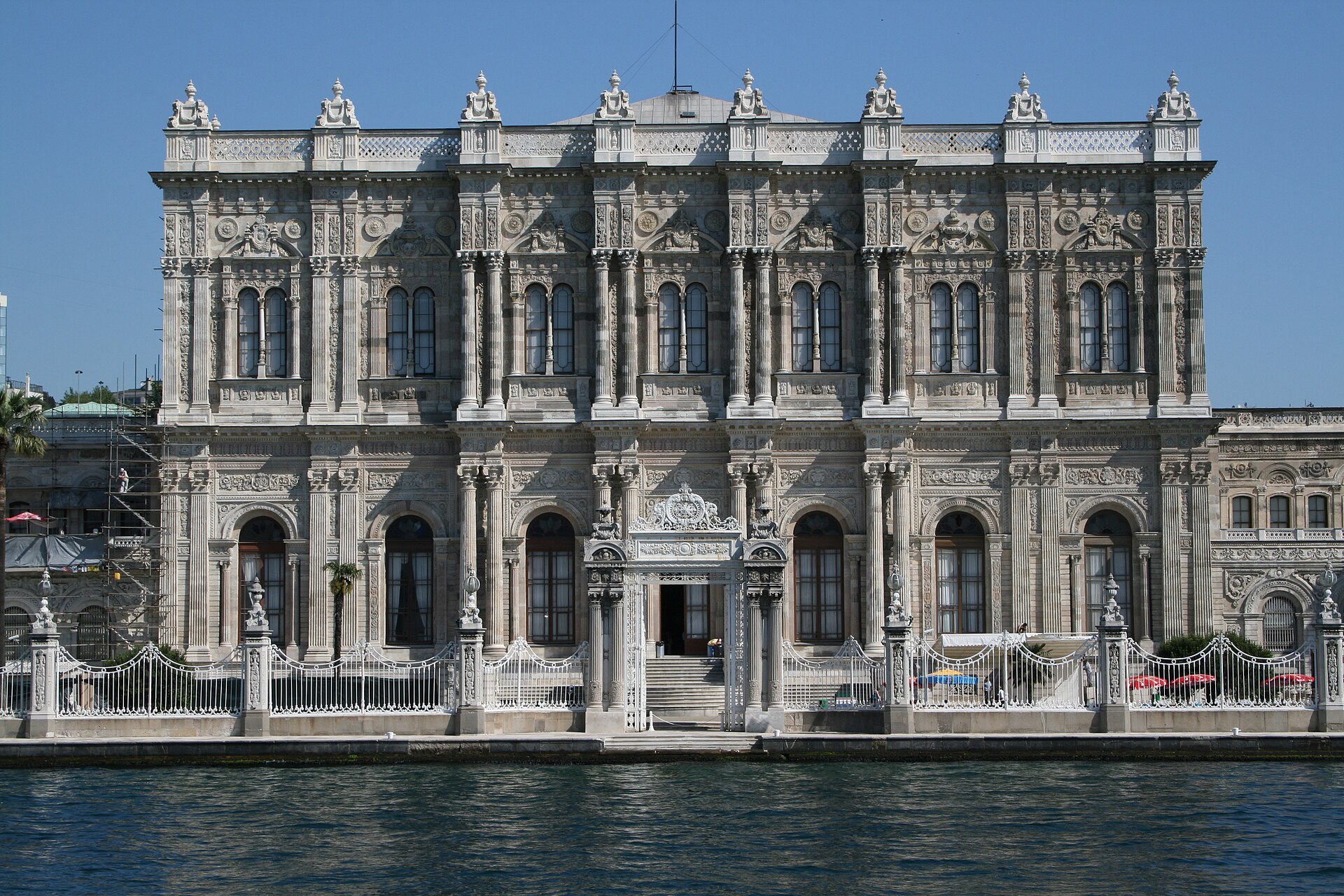 New
Istanbul, Türkiye · Palaces & landmarks
Menara Pavilion · Marrakech
Apollonaut, a Global Travel Platform · Apollonaut Pty Ltd.