 Bookable
An Apollonaut travel guide
The place behind the detail.
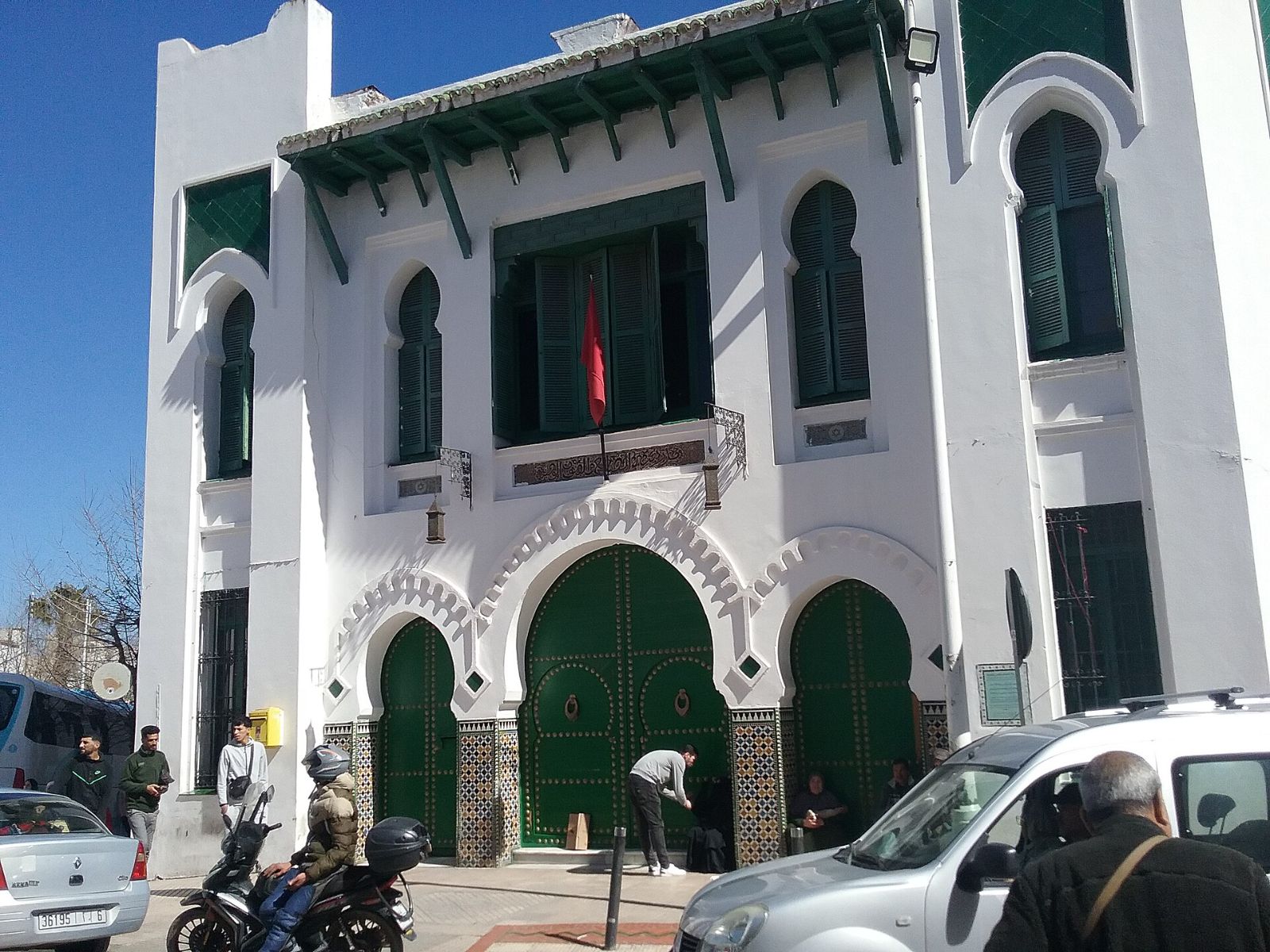
A carved entrance, a tiled courtyard and rooms for students offer several ways into the story of the madrasa.
On this page
A Marinid madrasa in Salé
The Marinid Madrasa, also known as the Madrasa of Abu al-Hasan, was founded by the Marinid sultan Abu al-Hasan beside the Great Mosque of Salé and completed around 1341. It was built to support the mosque as the centre of the city’s religious and intellectual life.
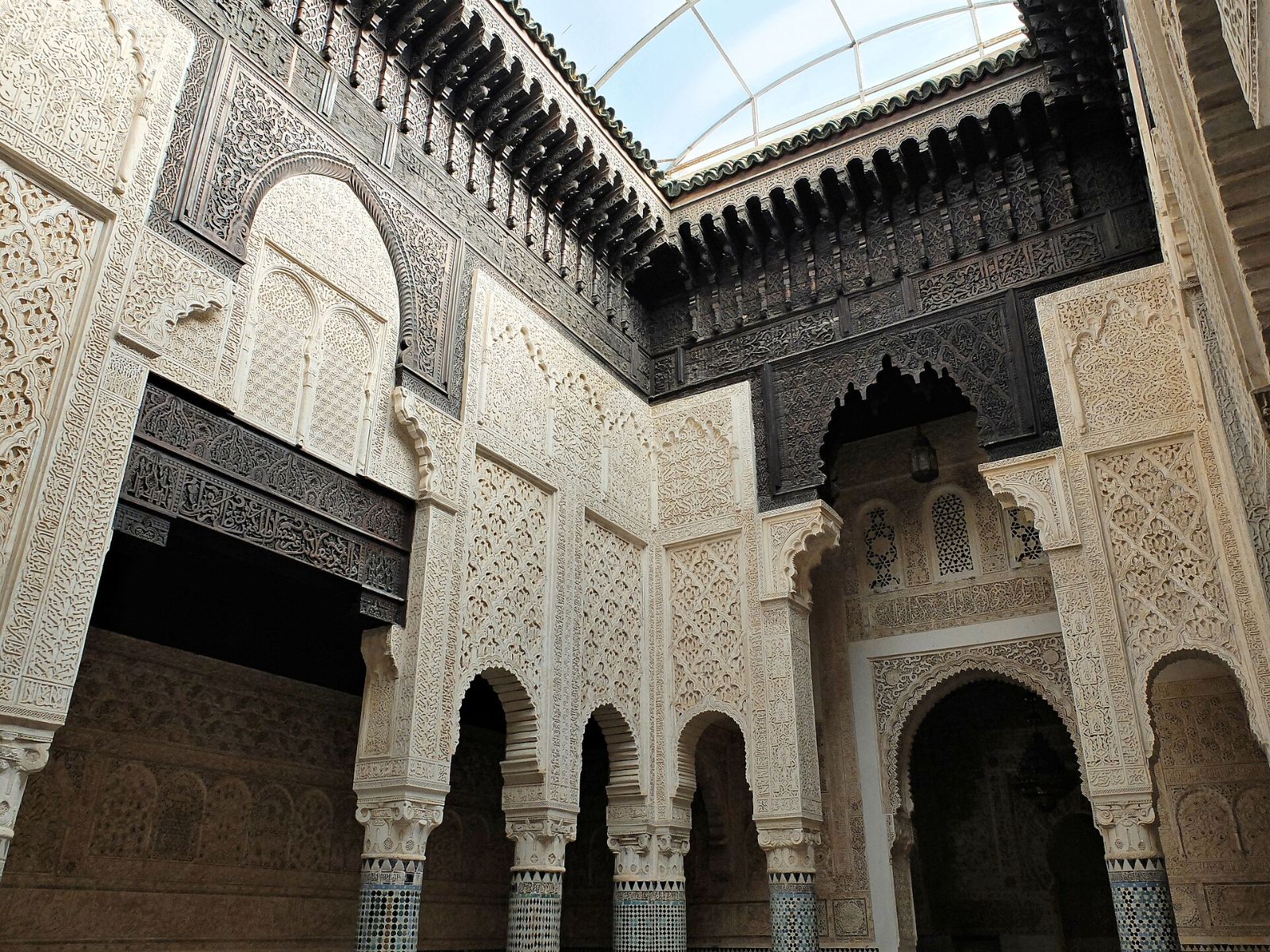
Stone steps lead from the entrance to a small rectangular courtyard with galleries on all four sides. The prayer hall lies at the far end, and two upper floors held the students’ rooms.
Tile, plaster and cedar
The madrasa is known for its decoration: zellij tilework on the floors and lower walls, carved plaster above, and carved cedar wood at the top, with calligraphic inscriptions and geometric and floral patterns. Stone capitals carry carved foliage and snail motifs.
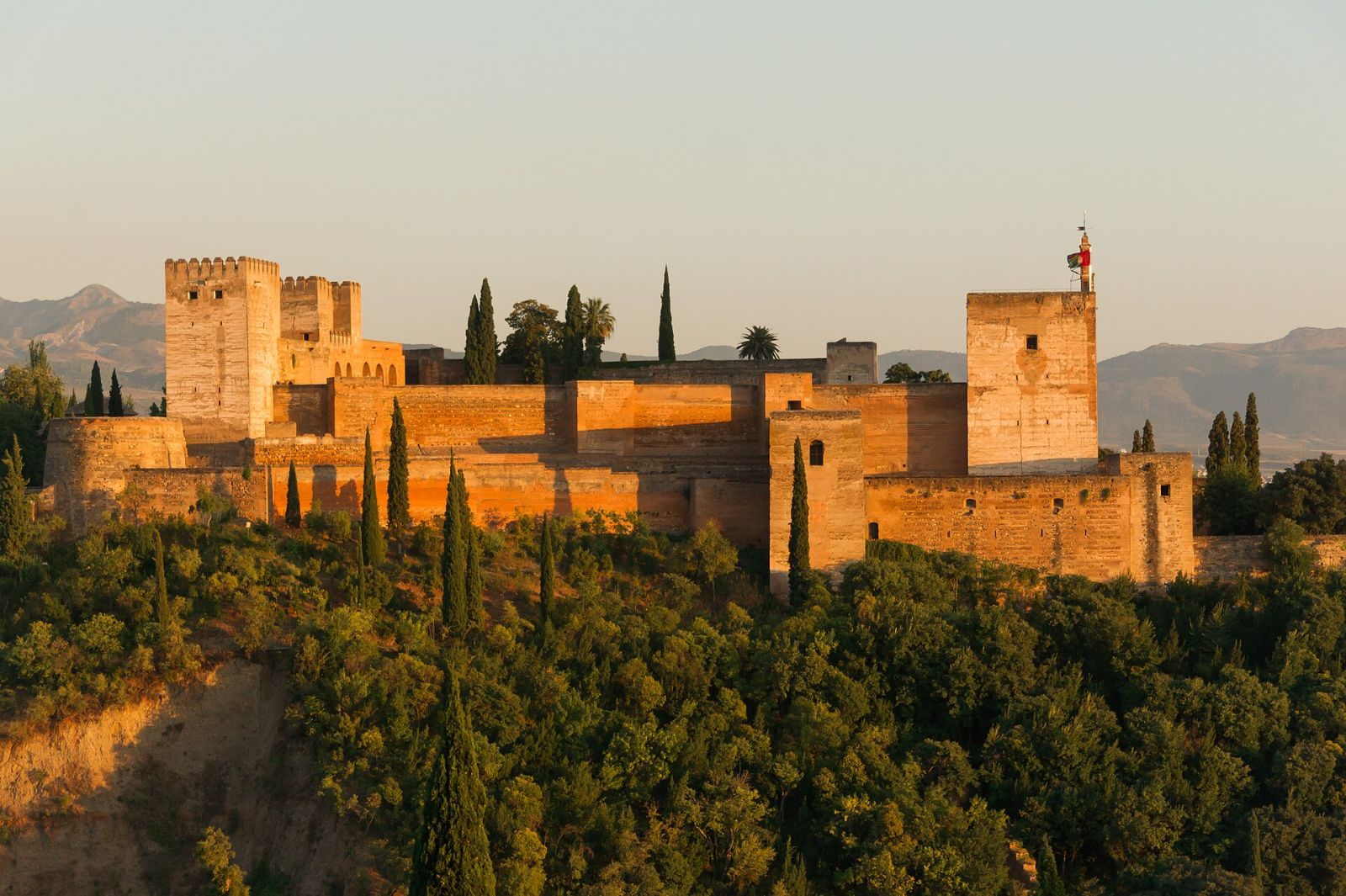
Its style is closer to the Nasrid art of Granada than that of most other Marinid madrasas.
Restored over the centuries
The madrasa was restored at the end of the 18th century by the qadi, or judge, of Salé, again in 1864, and later by the fine arts service during the French Protectorate. Le360 reports a further restoration in 2005.
This history belongs to the place and the people who shaped it. The History page offers a longer introduction, and the timeline gives a short route through selected milestones. The sources below were checked on 8 November 2026.
Read at the source
Sources & further reading
- Ministry of Youth, Culture and Sports: The Marinid Madrasa
- Wikipedia: Madrasa of Abu al-Hasan
- Le360: A la découverte de la médersa mérinide de Salé (27 February 2023)
Links lead to the original publishers.