 Bookable
An Apollonaut travel guide
The place behind the detail.
A carved dome, a water basin and the remains of a street fountain offer several ways into the story of the Almoravid Koubba.
On this page
A pavilion for ablutions
The Almoravid ruler Ali ibn Yusuf built the koubba beside the Ben Youssef Mosque, then the main mosque of Marrakech. It is generally understood to have been part of the mosque’s ablutions facility, where worshippers washed before prayer.
The domed pavilion is small, about 7.35 by 5.45 metres and 12 metres high, built of stone, brick and cedar wood, and it shelters a water basin. Beside it are the remains of a fountain open to the street, a vaulted cistern and a series of latrines.
A carved cupola
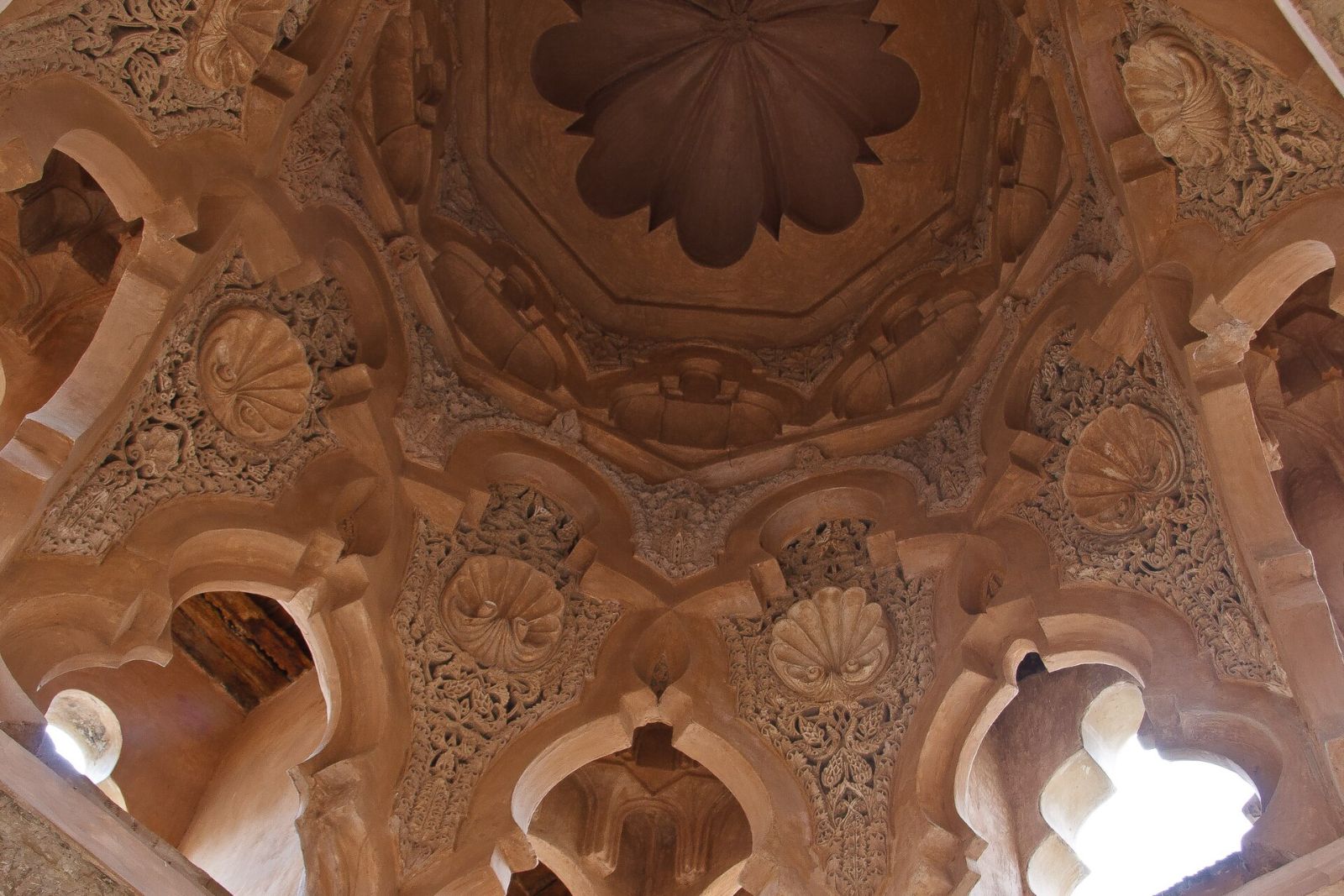
Inside, the cupola is carved with pine cones, palms, acanthus leaves, shells and palmettes, and it has been compared to the domes of the Great Mosque of Córdoba and the Bab al-Mardum Mosque in Toledo.
Small cupolas in the four corners carry some of the earliest muqarnas in Morocco. A damaged Arabic inscription runs around the interior and names Ali ibn Yusuf; its year can no longer be read, so the koubba is dated to 1117 or, more likely, 1125.
A rare survivor
The Almohads, who took Marrakech in 1147, destroyed most Almoravid monuments. Buried for centuries under rising ground and uncovered by archaeologists in the mid-20th century, the koubba is one of the few buildings to survive from Almoravid Marrakech.
This history belongs to the place and the people who shaped it. The History page offers a longer introduction, and the timeline gives a short route through selected milestones. Sources checked 8 November 2026.
Read at the source
Sources & further reading
- Wikipedia: Almoravid Qubba
- Ministry of Youth, Culture and Sports: The Almoravid Koubba
- UNESCO: Medina of Marrakesh
Links lead to the original publishers.