 Bookable
An Apollonaut travel guide
A museum on the park.
An introduction to Fifth Avenue and the Upper East Side, where The Met stands on the edge of Central Park.
On this page
Read the city from the steps
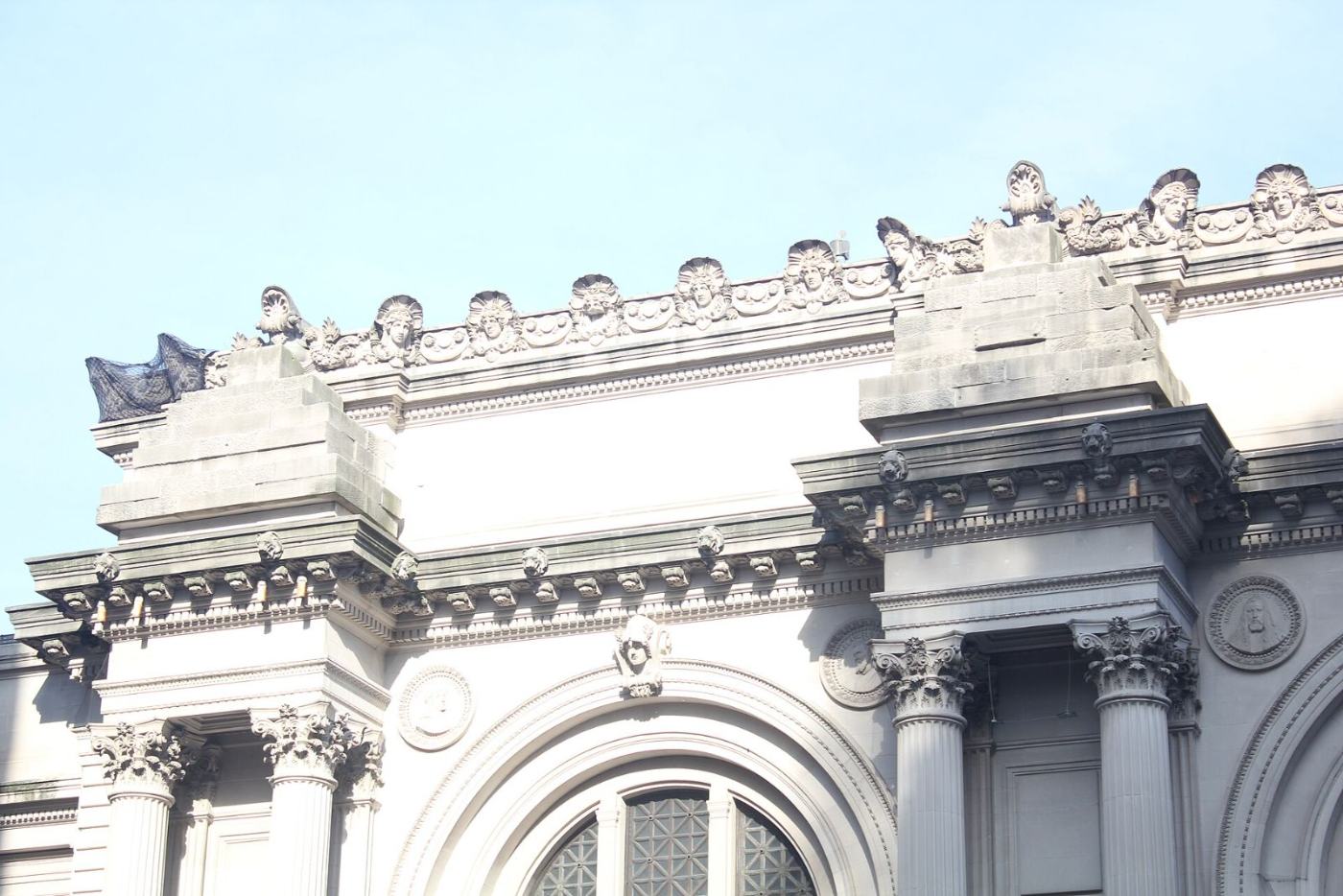
The Met stands on Fifth Avenue, on the eastern edge of Central Park. Its steps and the long Beaux-Arts façade face the street, while later wings reach back into the park.
A city guide can give context without turning a neighbourhood into a backdrop. Notice how a building addresses its street, how it meets a park and how it has grown over time.
Stone, glass and light
The museum’s oldest section was built of red brick and stone; the Hunts’ façade added columns and arches in pale stone; Roche-Dinkeloo’s additions use large walls of glass to bring in daylight, as in the wing of the Temple of Dendur.
Begin with a detail and ask how it was made and maintained. A photograph alone cannot tell you who carved a capital or fitted a glass wall, or the conditions in which they worked.
A Met chapter
The Met shows how a museum grows with its city: from a few rooms on Fifth Avenue in 1872 to a building that now stretches into Central Park.
Look at the meeting of old and new: Beaux-Arts stone on the avenue and glass walls facing the trees.
Make room for context
Pair this city reading with The Met’s history and the Journal. This is an introduction for visitors, not a claim that our team manages these places or represents the people who made them.
Read at the source
Sources & further reading
Links lead to the original publishers.