 Bookable
An Apollonaut travel guide
The place behind the walls.
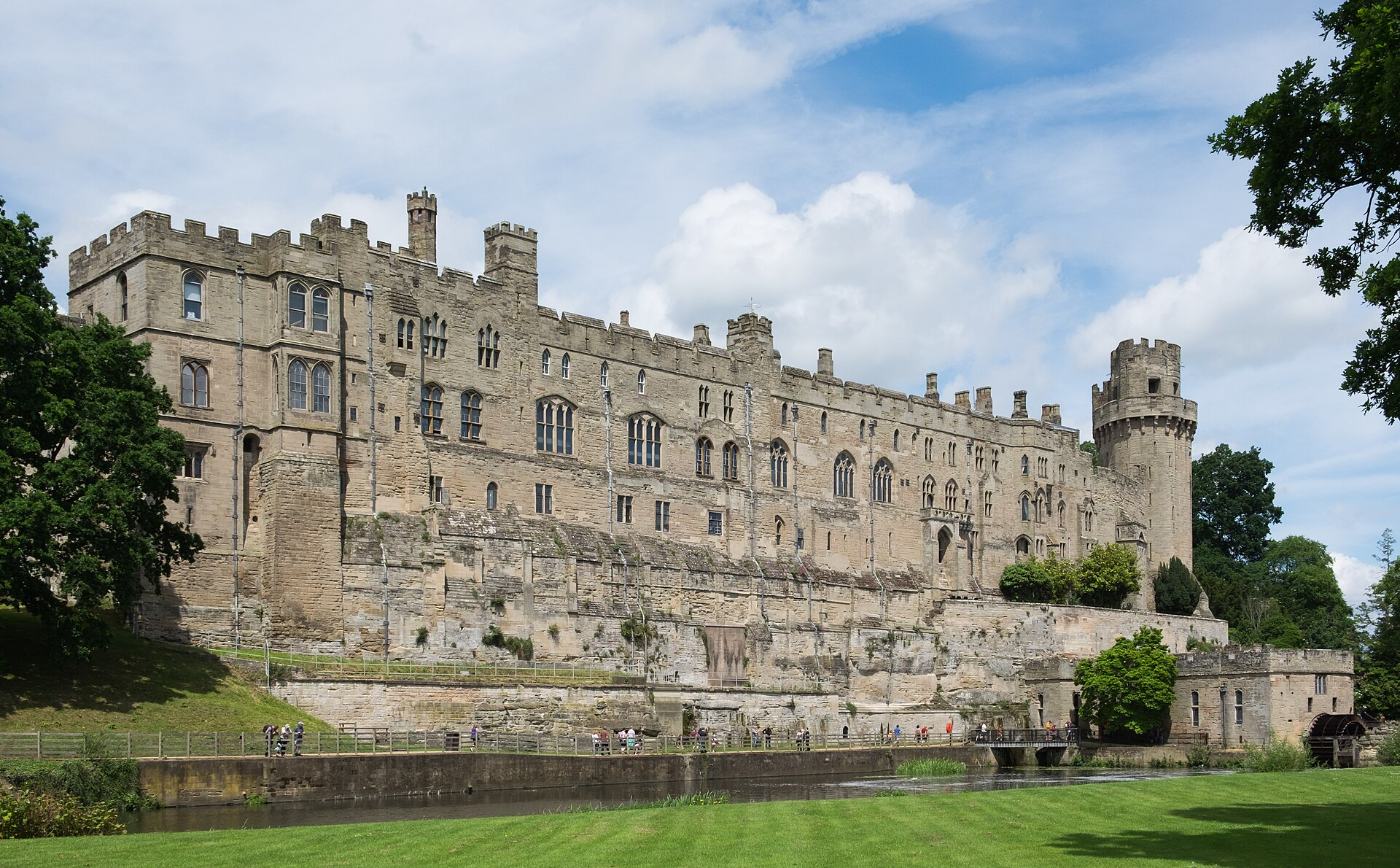
A Saxon burh, a Norman castle, the Earls of Warwick and a country house offer several ways into the story of Warwick Castle.
On this page
A burh and a Norman castle
An Anglo-Saxon burh was established at Warwick in 914, one of ten defending Mercia against the Danes. In 1068 William the Conqueror built a motte-and-bailey castle on a sandstone bluff above a bend in the River Avon.
The river and the cliff formed natural defences. The castle was rebuilt in stone in the 12th century, in the reign of Henry II.
The Earls of Warwick
Seven generations of the Beauchamp family held the castle for about 180 years, and between 1330 and 1360 they added Caesar’s Tower, Guy’s Tower and a new gatehouse. Their line ended in 1449.
Richard Neville, Earl of Warwick and known as the Kingmaker, held Edward IV prisoner at the castle in 1469. In 1604 James I granted it to Fulke Greville, whose family made it a country house and owned it until 1978.
A protected landmark
Warwick Castle is a Grade I listed building, and its uninhabited parts are a scheduled monument. Its park and gardens, landscaped by Capability Brown from 1749, are on the National Register of Historic Parks and Gardens at Grade I.
This history belongs to the place and the people who shaped it. The History page offers a longer introduction, and the timeline gives a short route through selected milestones.
Read at the source
Sources & further reading
Links lead to the original publishers.